Does Gen Z Care About Your 'Brand?'
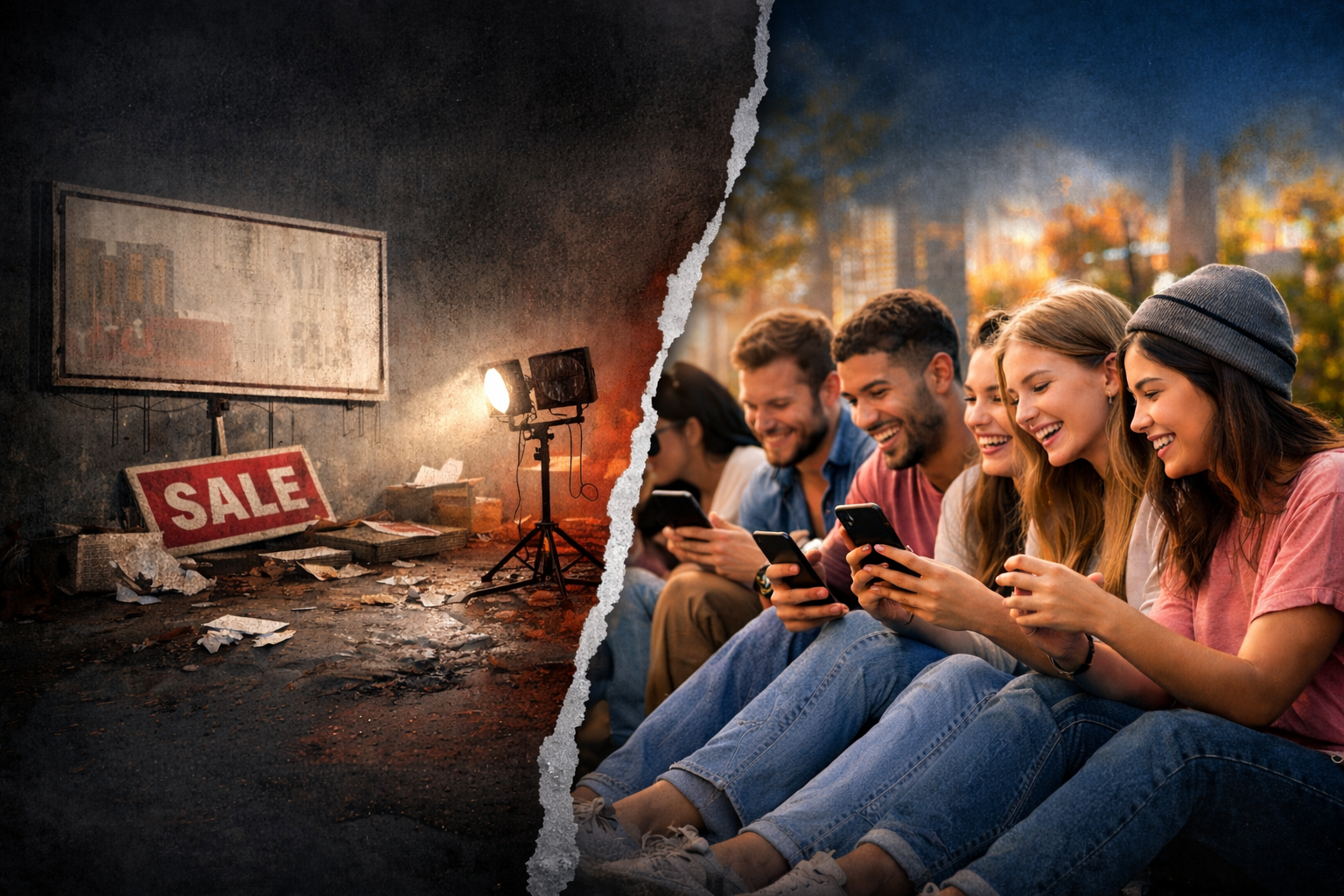
I’ll be straight about this. I’ve spent the better part of 10 years learning how to reach people through media. And lately, it feels like the ground has shifted enough that most of what we thought we understood about consumer trust no longer applies… almost.
Pulse Advertising just put numbers to something that’s been quietly happening for a while: Gen Z does not care about brand legacy. They’re not moved by polished launch events. And that expensive TV spot your team agonized over? They’ve never seen it. They’re watching a creator named @whynot_zack run a battery test on your new camera while they eat chips.
That’s not sarcasm. That’s the data.
The new generation
When Gen Z wants to buy something, they don’t go to brand websites. They don’t read traditional reviews. They watch creators. People filming in bedrooms, garages, or kitchens, usually with a ring light and no script.
These creators unbox products, show how they actually work, explain features in plain language, and most importantly: they’re trusted. More than old school media. More than advertising. More than the brands themselves.
Pulse’s research also shows that over 80% of Gen Z purchase conversations happen in private group chats and DMs. You can’t track it. You can’t measure it. You can’t even see it. It’s being labeled “dark social,” which sounds ominous, but it’s really just people texting friends: “Is this worth it?”
That’s where decisions are being made now.
Which makes the traditional launch playbook feel increasingly pointless. The keynote. The press release. The coordinated social rollout. All of it feels disconnected from how buying actually happens.
What works instead is long-form, serialized content. Multi-episode reviews. “Day 47 with this device.” Real long-term usage. Less spectacle, more reality. Less Mad Men, more mundane honesty. Do this and Gen Z is more likely to pay attention.
Here’s the part that really trips people up: influence is moving offline again. Creators are hosting meetups, live demos, in-person events. They’re bringing audiences into physical spaces to touch products and ask questions.
It’s almost ironic. We’ve gone full circle—back to something resembling the retail experience we 90’s kids grew up with. Except now it’s a 23-year-old creator running the show instead of a sales associate.
Pulse’s CEO, Lara Daniel, says brands need to move away from top-down broadcast advertising and toward community-driven influence ecosystems. It sounds messy. It is messy. But she’s right.
The brands winning right now aren’t the loudest. They’re the ones collaborating with creators, supporting communities, and actually listening.
Is this the death of brand advertising? No.
The entire point of brand strategy and brand marketing has always been to build community, and ultimately, a tribe. A real one. Tribes talk about you in rooms you’re not in. They recommend you. They defend you. They bring others in without being asked.
That’s not a loss of control. That’s the objective.
Tribes are loyal. They come back. They choose you repeatedly. And from a business standpoint, they lower your cost of advertising because they spread the message for free—not because they’re incentivized, but because they believe in what you’ve built.
So is it alarming that Gen Z is taking these conversations offline? No.
The entire point was to create an experience strong enough that people carry it into their personal lives. Into group chats. Into DMs. Into real conversations with friends.
If people are talking about your brand where you can’t hear it, that’s not a failure. That’s proof the brand is working.
Brands were never meant to sit in the middle of every conversation. They were meant to earn their way into them.